
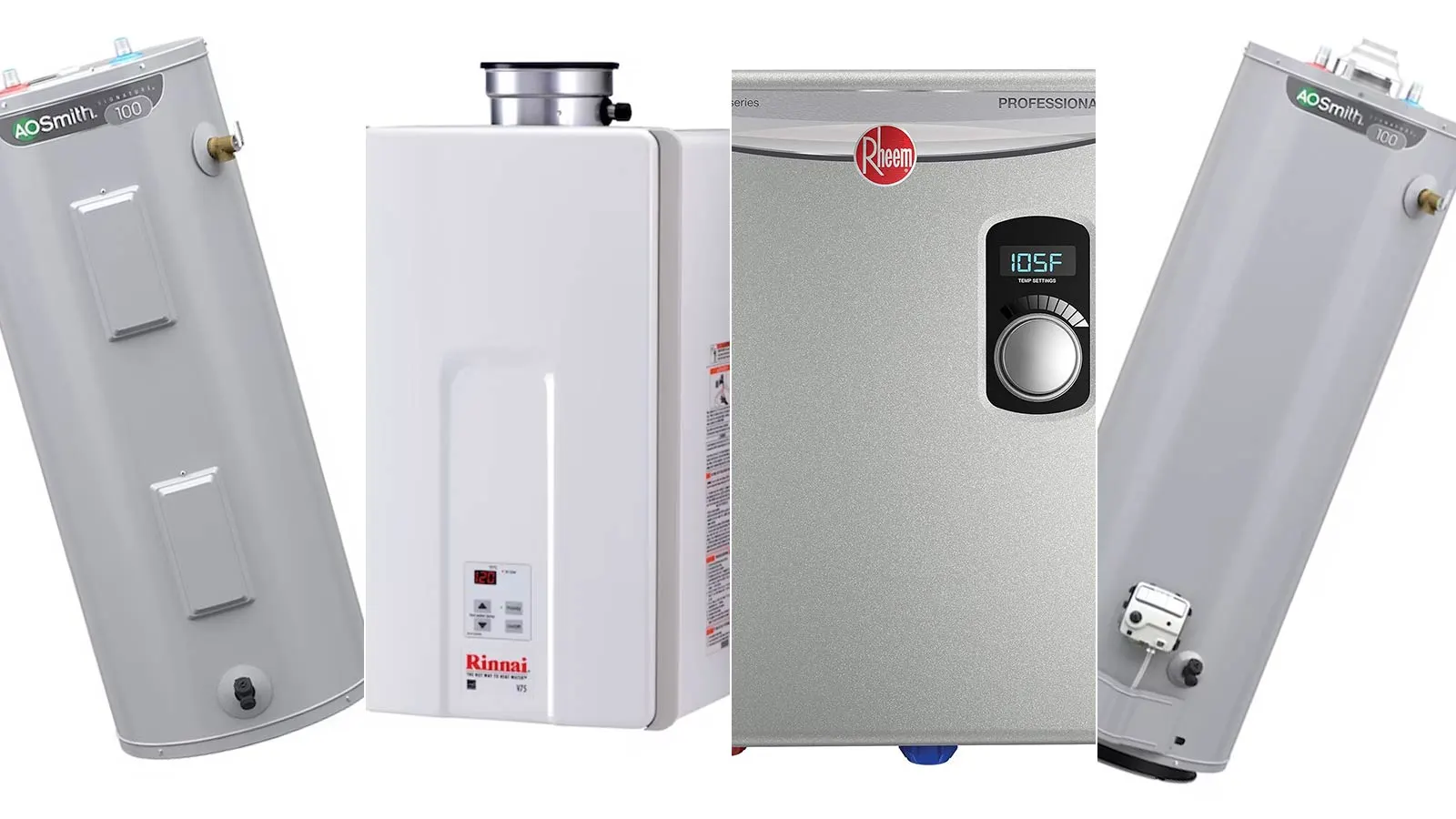
Your water heater broke, and it’s February in Massachusetts. Nothing like a cold shower to start the day. You need a new unit fast, and you already know this isn’t a weekend DIY job — there’s gas, electric, code, venting, and a whole lot of ways to get it wrong.
You don’t have to figure it out alone. I’m Richard Curley, and I’ve been installing water heaters across the MetroWest towns since 1980. Call me at (978) 562-3736 and I’ll walk you through what your home actually needs — no call center, just a plumber who’s done this a few thousand times.
Here’s how the whole thing works, so you know what to expect before you spend a dime.
Before You Buy: What to Check First
Before a new water heater shows up at your door, you need to know a few things about the one you’re replacing. Is it gas or electric? How old is it? Where does it sit — a corner of the basement, a tight utility closet, up against a wall that limits what size unit fits?
All of that matters, because water heaters come in more sizes and venting styles than people expect, and the wrong guess means a unit that doesn’t fit the space or the connections. Your plumber will measure and confirm all of this during the estimate, so you’re not stuck with a heater you can’t use.
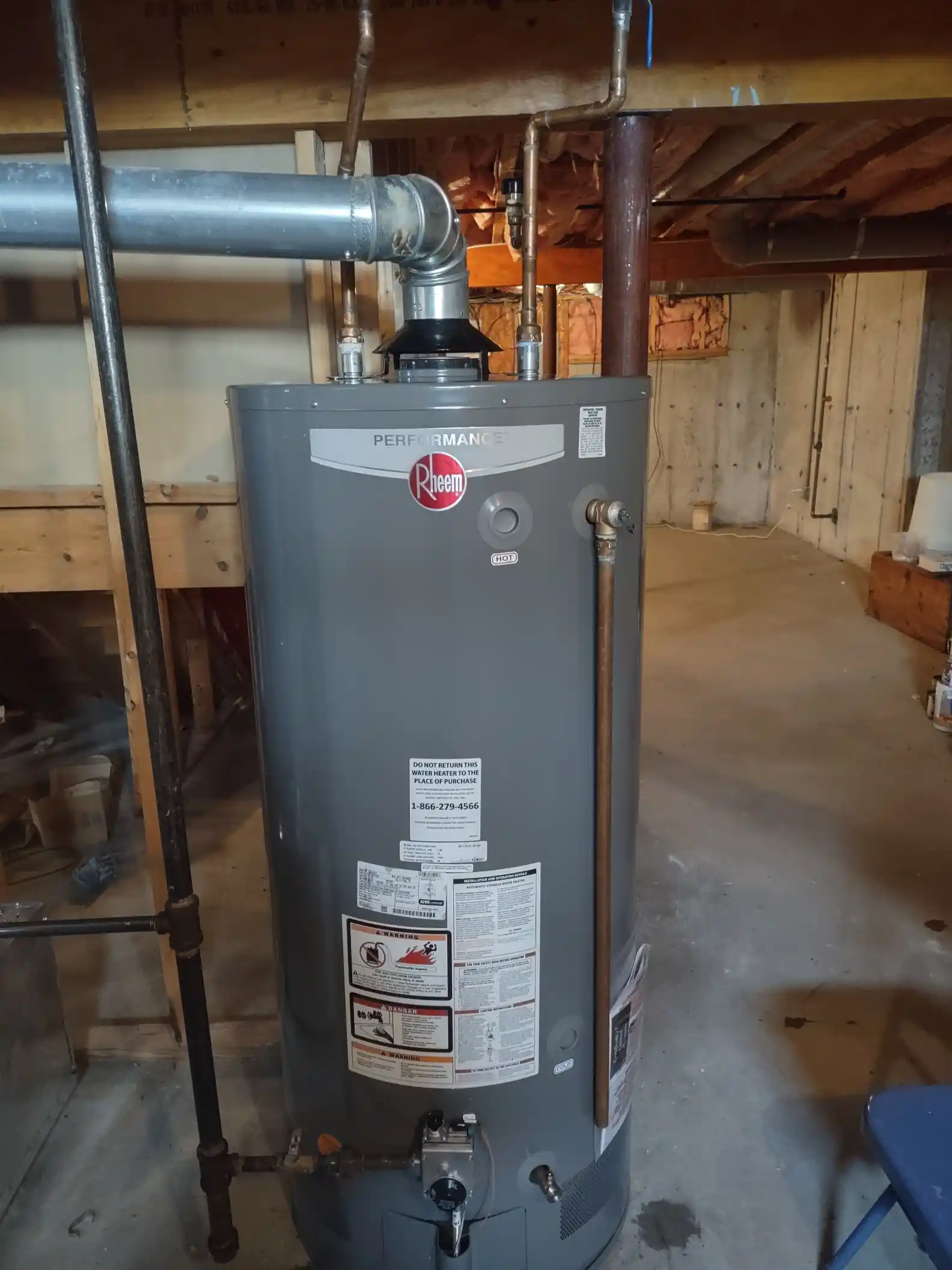
You’ll also want to understand the code side, but you don’t have to be the expert — that’s what you’re hiring a pro for. Massachusetts has specific requirements for venting, pressure relief valves, and seismic straps, and towns around here enforce them differently. A licensed plumber knows what your town requires and handles it so the inspection passes the first time.
If You’re Upgrading From an Old Unit, Read This
If your house still has an old atmospheric-vent gas heater, plan on a change. Many towns now require a power-vent or direct-vent system instead, because the newer styles don’t backdraft dangerous gases into your home. It’s a safety upgrade, not an upsell.
Same goes for the expansion tank. On modern closed plumbing systems, an expansion tank is now standard equipment — it absorbs the pressure from water heating and expanding inside the pipes, so your new heater and your pipes both last longer. A good plumber will tell you if your home needs one; many older Metrowest homes do.
The Installation Process, Step by Step
Here’s what actually happens when we install your new heater, so nothing surprises you.
First, we disconnect and drain the old unit so it can be removed without spilling water. For gas heaters, we shut off the gas supply and cap the line. For electric, we cut power at the breaker.
Next, the new unit goes in and we make every connection — the water lines, the temperature and pressure relief valve, and that expansion tank if you need one. On gas models we test every gas fitting for leaks and check the venting against local code, because a bad vent is how carbon monoxide sneaks into a home. On electric models, if the new heater draws more power than the old one, that’s where an upgraded circuit or service panel sometimes comes in.
Then we fill the system, bleed the air out of the lines, and fire it up. We check every joint for leaks, run it through its cycles, and set the thermostat where it belongs. Before we leave, we make sure the whole job passes a visual inspection against state and town code.
Choosing Between a Tank and a Tankless System
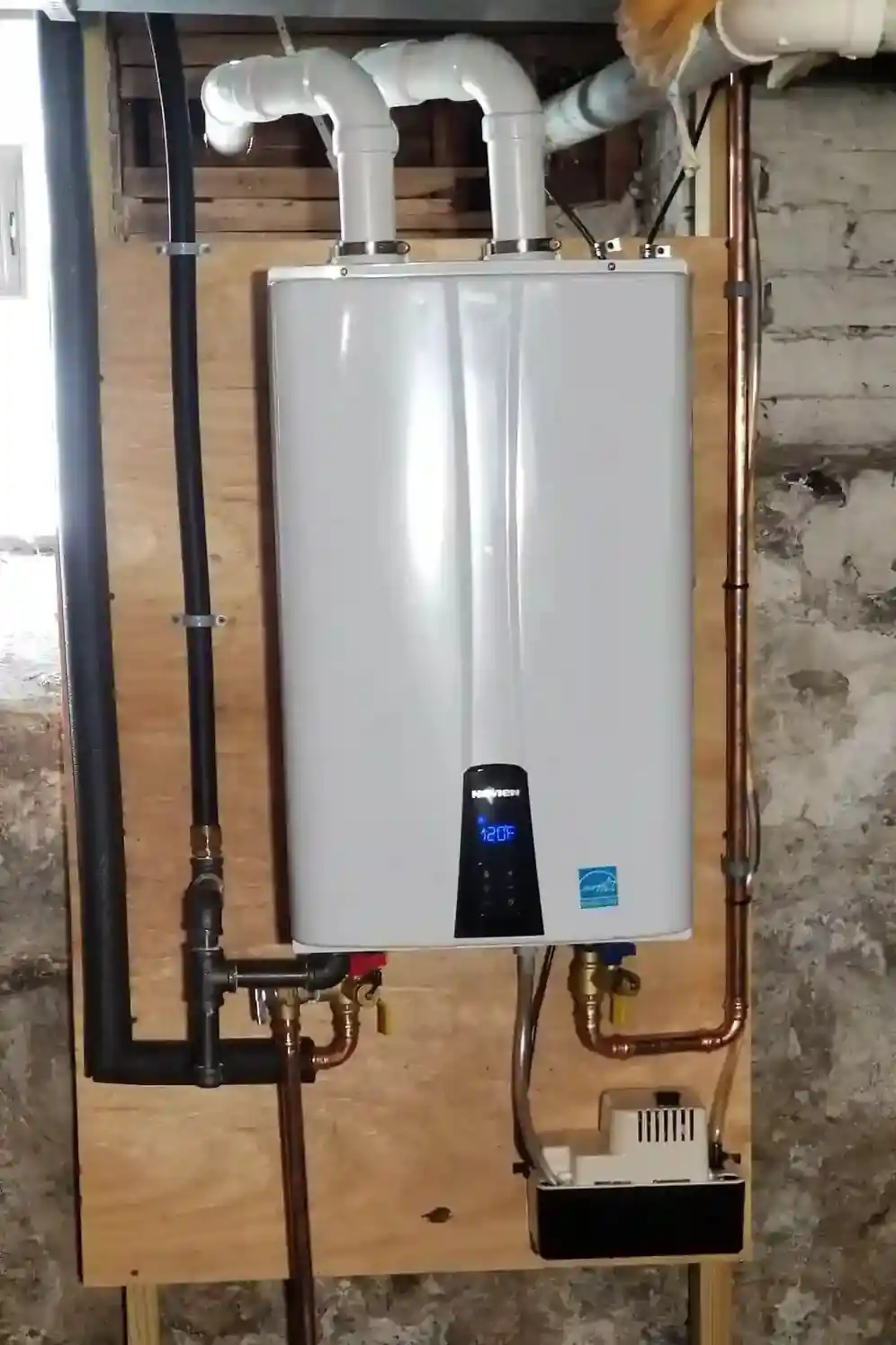
You’ve got two real choices — a traditional storage tank, or an on-demand tankless unit. Both work in Massachusetts homes; which one’s right depends on your household.
A storage tank heater is what most homes have, and for good reason. It costs less up front and keeps a big store of hot water ready whenever you turn the tap. The trade-off is that it’s heating that water around the clock, and it can run out during a long stretch of back-to-back showers.
A tankless heater heats the water as it flows, so you never run out. It takes up less space and uses less energy. But the install usually costs more up front, and it often means upgrading your gas line or electrical service to feed it. Sizing matters more with tankless too — especially in a cold Massachusetts winter when the incoming water is freezing. Call me and I’ll tell you honestly whether a tankless unit makes sense for your home or whether you’re better off with a tank.
For residents in towns like Sudbury or Maynard, working with a local expert like Richard T. Curley Plumbing & Heating means faster service and community knowledge.
Why You Need a Licensed Massachusetts Plumber
I’ll be direct: water heater installation is not a job to save money on by doing it yourself. A gas line mistake can cause an explosion. An electrical mistake can shock someone or start a fire. Even a sloppy plumbing connection can quietly leak and rot out a floor. These are all things I’ve been called out to fix after someone tried to do it themselves.
A licensed plumber knows the Massachusetts code cold — from the Boston metro out through the Metrowest suburbs I work in every week — and installs the safety devices (venting, expansion tank, relief valve) that protect your home and your insurance. Most importantly, a real local plumber stands behind the work long after the truck pulls away.
That’s the difference with working with someone like me. When your heater acts up a year from now, you’re calling the same guy who installed it — not a call center two states away. Richard T. Curley Plumbing & Heating serves Hudson, Sudbury, Marlborough, Bolton, Berlin, Stow, Maynard, and the surrounding towns. Call (978) 562-3736.
How Metrowest Water Affects Your Water Heater
Most homeowners don’t realize the water coming into their house changes from town to town, and it changes what your water heater is up against.
Hudson and Marlborough pull from municipal supply, and the hardness swings with the season. Bolton, Berlin, and parts of Sudbury and Stow run on well water loaded with minerals that settle in the bottom of your tank and eat away at the lining over time. Maynard’s older infrastructure adds its own quirks, house by house.
What that means: the same water heater installed in Bolton works harder than one in Hudson. Sediment shortens tank life. Hard water cuts efficiency. And the anode rod — the part that sacrifices itself to protect your tank from corrosion — dissolves faster in mineral-heavy water, which means if you don’t catch it in time, your tank’s left unprotected.
We break it down town by town in our guide, so you understand exactly what your local water is doing to your heater — and what to do about it.
Check out our town‑by‑town Metrowest water quality guide, to see how your local water affects your water heater — and what you can do about it.