Call us at...


Water Heater Installation, Replacement & Repair in Hudson, MA
A cold shower in Hudson isn't just unpleasant — it's a sign your water heater needs attention. Richard T. Curley Plumbing & Heating handles everything from pilot-light fixes to full tank installations and replacements in Hudson homes. Whether yours is gas, electric, or power-vent, we diagnose the issue and get your hot water back the same day.
Hudson runs on two kinds of water. Most of the town draws from the municipal wells — water that's been filtered through one of the most advanced PFAS treatment plants in the state, and that still carries minerals that build up inside a tank. But the edges of town are on private wells: the lots around Lake Boon, and the spreads out toward the Berlin town line, where I live. Both sides are hard on a water heater, just in different ways. What most Hudson homes share instead is the basement — tight fieldstone cellars with low headroom, narrow bulkheads, and heaters tucked into corners where a modern tall tank fights to fit. We've been swapping them in Hudson since 1980, and we know the difference between a job that drops in and one that has to come down the stairs sideways.
There’s a second advantage buried in Hudson that most of the towns around us don’t get: Hudson Light & Power. It’s the town’s own municipal electric utility, and its rates run well below the big investor utilities, which flips the usual water-heater math. In most of Massachusetts, high-draw electric appliances cost too much to run month after month. In Hudson, an electric — and especially a hybrid heat-pump — water heater is genuinely economical, which is a real reason to go electric here that a Sudbury or Acton homeowner doesn’t have. The rebates work differently too: Hudson’s municipal utility doesn’t run the standard Mass Save electric program, so the efficiency money for a new water heater flows through the municipal channel instead.
For the full picture on water heater types, costs, and what to expect, read our complete guide to water heater installation in Massachusetts.
The Water Heater Business...
Richard T. Curley Plumbing & Heating has provided Hudson, Massachusetts, with affordable water heater installation, replacement, and repairs since 1980. We do our best to provide the residents of Hudson, Massachusetts, with same-day service…
We keep the parts that fail most often on the truck, so when your heater dies on a January morning, we’re not making you wait for a supply house delivery.
"Specializing in water heaters"
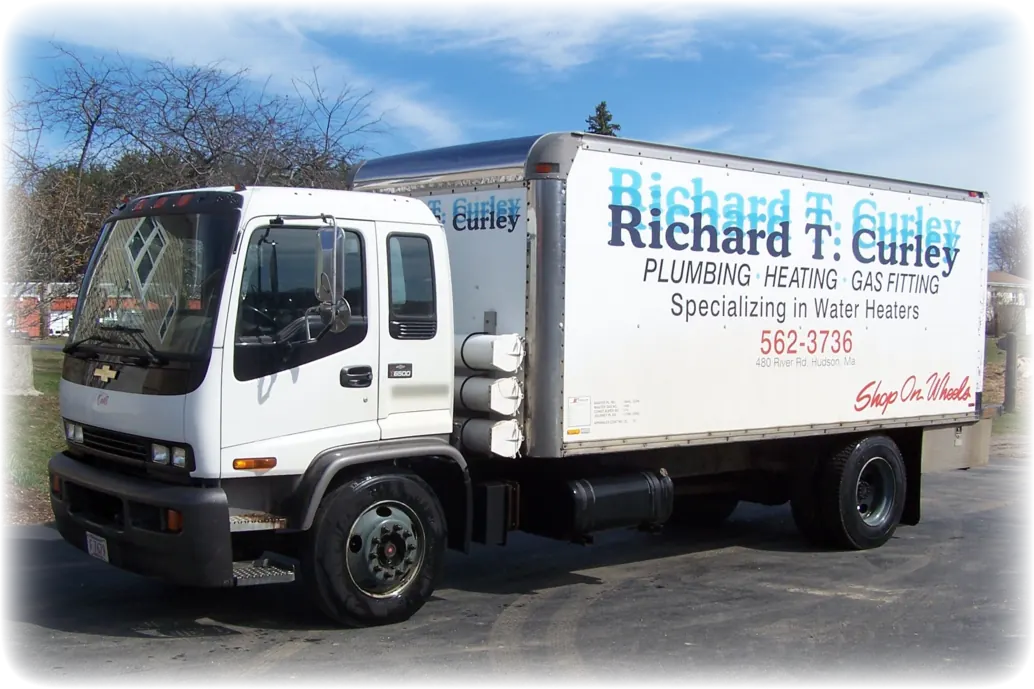
“Specializing in Water Heaters” We don’t just say that — it’s written right on the side of our trucks, and it has been for over 40 years.
In Hudson’s older colonials and capes, we mostly find gas water heaters tucked into basement corners near the chimney, close to where the old boiler used to sit.
Gas Water Heaters
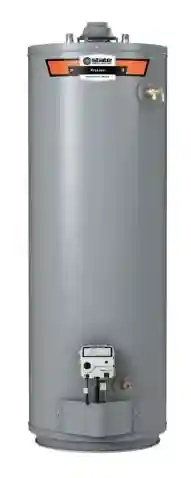
Gas water heaters (natural gas or propane) are atmospheric-vented models, venting galvanized pipe into a chimney. In Hudson’s older colonials and capes, this is the setup we see most — the heater sits in a basement corner near the chimney, dropped in where the old boiler used to be, venting up the same masonry stack. When those homes convert their heat to mini-splits, the water heater gets left alone in an oversized, unlined chimney, and the draft goes bad — which is exactly when a power-vent upgrade becomes the fix.
- Installation
- Replacement
- Repair
- Gas thermostats
- Thermocouple
- Temperature and Pressure Safety Valve
- Vacuum Relief Valve
- Expansion Tank
Power-Vent Water Heaters
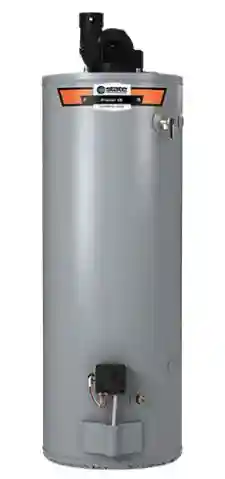
Power-vent water heaters are the atmospheric model with a re-engineered exhaust — a PVC vent and a blower on top that pushes combustion by-products out the roof or a sidewall when there’s no reliable chimney. They’re the right answer when a Hudson home has gone away from the old boiler stack, but the trade-off here is the fieldstone: routing a PVC vent through a thick historic foundation wall is work you want done right the first time.
- Installation
- Replacement
- Repair
- Gas thermostats
- Temperature and Pressure Safety Valve
- Vacuum Relief Valve
- Expansion Tank
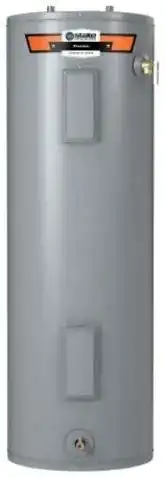
Electric Water Heaters
Electric water heaters and especially the hybrid heat-pump models — are the surprise strong pick in Hudson because of HLPD’s low rates. The catch is the house itself: a heat-pump unit stands taller and wider than a standard tank and needs hundreds of cubic feet of surrounding air to pull heat from, and a tight, low fieldstone cellar often doesn’t have it plain. In those homes it’s a standard electric, sized to fit the stairs it has to come down.
- Installation
- Replacement
- Repair
- Thermostats
- Heating elements
- Temperature and Pressure Safety Valve
- Vacuum Relief Valve
- Expansion Tank
Water heaters across the MetroWest…
Richard T. Curley Plumbing & Heating handles water heaters in Hudson and the towns around it. If you’re in a neighboring town, here’s where to go:
Call (978) 562-3736 for service in Hudson or any of these towns.
Frequently Asked Questions About Water Heaters in Hudson
Same day in almost every case. We’re based in Hudson, so most addresses are minutes away. We show up stocked with the parts that fail most often, so in most cases we don’t need to run to a supply house. Call (978) 562-3736. A cold shower in a Hudson colonial in January is not something you wait until tomorrow to fix.
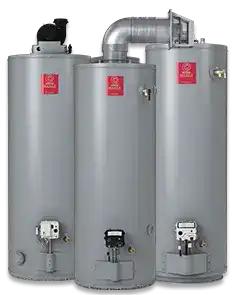
That’s exactly why we built this page. Look at the photos above. If your heater has a metal flue pipe running into a chimney, it’s gas. If it has no flue but a power cord, it’s electric. If it has a black plastic blower motor on top with PVC pipes, it’s power-vent. If none of them match, take a photo with your phone and text it to us. We’ll identify it and tell you what a replacement costs before we even roll the truck.
A standard 40-gallon gas water heater typically runs between $1,500 and $2,200 installed. A 50-gallon power-vent unit runs $1,800 to $2,800. Electric heaters are usually $1,200 to $1,800. The exact cost depends on the unit you choose, whether the venting and gas line are in good shape, and whether the old heater drained clean or left us a mess. We give you a firm quote before we touch anything.
Usually yes. The most common cause is a bad thermocouple — the safety sensor that tells the gas valve the pilot is burning. If the thermocouple is shot, we swap it in about 30 minutes and the heater runs again. If the gas valve itself is failing or the burner assembly is rusted out, replacement makes more sense than repair. We’ll tell you which one applies before we do either.
A power-vent unit uses a blower motor to push exhaust gases through PVC pipe instead of relying on a chimney draft. As the blower ages, the bearings wear and the fan gets louder. A rattle usually means a loose mounting screw or debris in the blower housing. A high-pitched whine is the motor itself going. We can replace the blower motor on most Bradford White and Rheem units. If the tank is old and the motor is shot, full replacement is usually the smarter call.
Most standard gas and electric water heaters last 8 to 12 years. Power-vent units tend toward the shorter end of that range because the blower motor adds a failure point. Hudson’s municipal water is treated with chlorine, which accelerates corrosion inside the tank slightly compared to untreated well water. The single best thing you can do for longevity: drain a few gallons from the tank every six months. It clears the sediment off the bottom before it hardens. Almost nobody does it, but the heaters that get drained last.
No. A leak from the bottom of the tank means the steel shell has rusted through from the inside. There’s no patching it. Shut off the water supply to the heater immediately, turn off the gas or electric, and call us. The tank will continue to leak until it’s replaced, and a small leak can become a flooded basement with little warning.
If your water heater was sized for two people and now there are four, or if it’s eight years old and the bottom is layered with sediment, the recovery time stretches out. Sediment insulates the water from the burner, so the heater runs longer to reheat the same volume. A 40-gallon tank with heavy sediment might only deliver 30 gallons of usable hot water. We can flush the tank and see if it recovers — if the sediment is too dense or the dip tube is broken, replacement is the fix.
Not sure what’s going on? Our rundown of 12 common plumbing problems in Hudson helps you narrow it down before the truck arrives.
If your water heater job turns up a leaky faucet or slow drain, our kitchen plumbing in Hudson covers faucets, sinks, disposals, and dishwasher hookups — same-day, same truck.
If the issue is in the bathroom instead, our bathroom plumbing in Hudson handles faucets, drains, toilets, and shower valves.
If your water heater is aging out and your boiler is tired too, our heating services in Hudson handle repairs, replacements, and installs — same-day, same truck.
For everything we do in Hudson — water heaters, kitchens, bathrooms, heating, and more — see our full Hudson plumbing services page.