Call us at...


Water Heater Installation, Replacement & Repair in Maynard, MA
Maynard's older mill-era homes often have water heaters tucked into tight corners or converted closets. We're comfortable working in confined spaces and can find a replacement unit that fits your existing footprint. Gas, electric, and power-vent repairs and installations — same-day service across Maynard.
Maynard's water comes from municipal wells in the Assabet River basin — 100% groundwater, not Quabbin. The town disinfects with free chlorine and filters out the iron and manganese before it reaches your tap. What that leaves in the water is the part that matters to a water heater: a chlorine residual that's hard on the sacrificial anode rod and, over the years, on rubber gaskets and supply lines. The telltale sign is a faint sulfur or rotten-egg smell from the hot water — that's the chlorine reacting with the rod, and it usually means the rod is near its end. In a Maynard tank that never got flushed because it's wedged under the stairs, that's the failure you'll meet first.
We’ve been swapping water heaters in Maynard since 1980, and we know the houses and the tight spots as well as we know the plumbing. We keep the parts that fail most often on the truck, so when a mill-house heater gives out you’re not waiting on a supply house — you’re getting the old one out through a narrow bulkhead and a unit that actually fits the corner it has to live in.
Tight spaces and older homes need the right unit. Read our complete guide to water heater installation in Massachusetts.
Water Heater Services in Maynard...
Richard T. Curley Plumbing & Heating has provided Maynard, Massachusetts, with affordable water heater installation, replacement, and repairs since 1980. We do our best to provide Maynard residents with same-day service.
…and we keep the parts that fail most often on the truck, so you’re not waiting on a supply house.
"Specializing in water heaters"
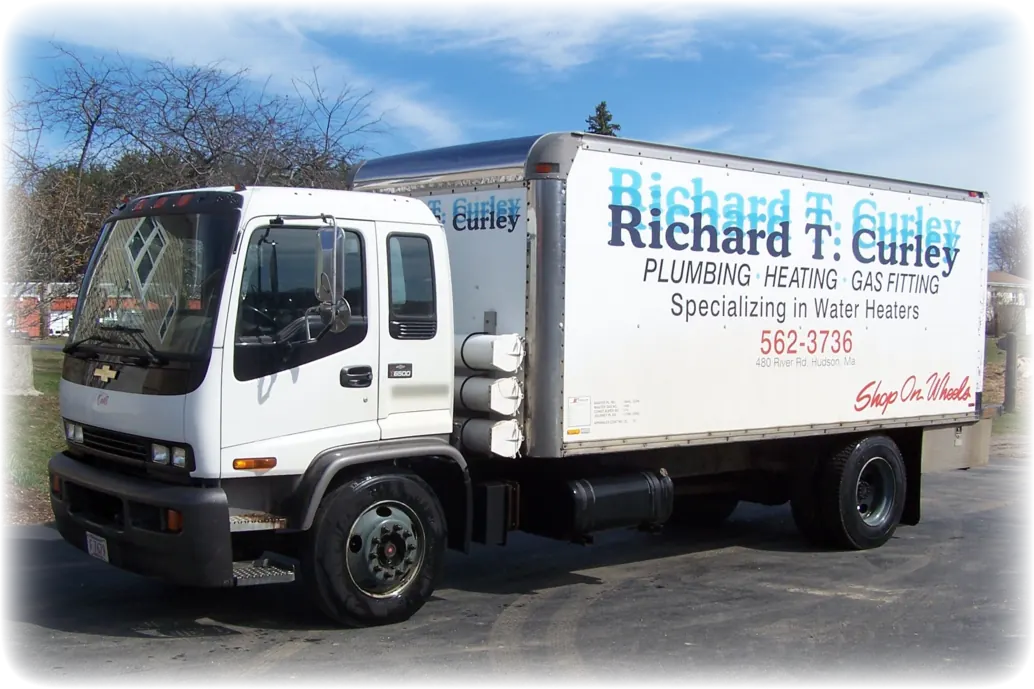
“Specializing in Water Heaters” — we don’t just say that. It’s written right on the side of all of our trucks for over 40 years.
In Maynard’s mill-era homes, we’re usually squeezing a gas or electric tank out of a tight corner that was never meant to have a water heater in it.
Gas Water Heaters
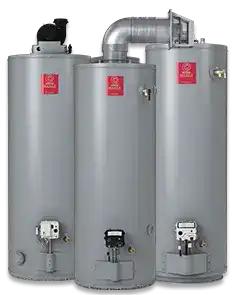
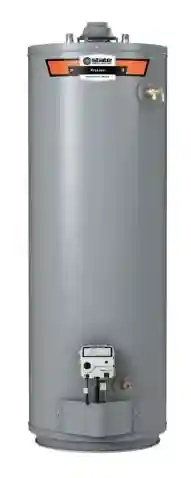
Gas water heaters (natural gas or propane) are atmospheric-vented models, venting galvanized pipe into a masonry chimney. In Maynard’s mill-era homes this is the setup we see most — the tank is wedged into a tight basement corner or a converted closet, vented up the same stack the house has had for a century. The job here is as much about getting the old one out and the new one in through a narrow bulkhead as it is about the plumbing, so we plan the route before the tank comes down the stairs.
And a lot of these mill-house basements are fieldstone or rubble. Running a new vent or intake through a two-foot-thick granite foundation isn’t a drill-and-go job — it takes masonry tools and a plan, so we account for that before we start rather than discovering it mid-install.
- Installation
- Repair
- Gas thermostats
- Thermocouple
- Temperature and Pressure Safety Valve
- Vacuum Relief Valve
- Expansion Tank
Power-Vent Water Heaters
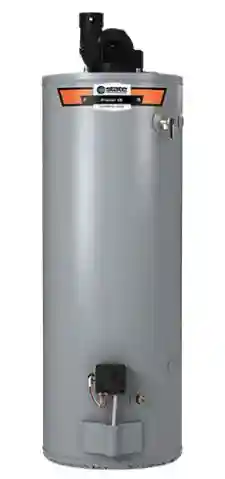
Power-vent water heaters are the atmospheric model with a re-engineered exhaust — a PVC vent and a blower on top that pushes combustion by-products out the roof or a sidewall when there’s no reliable chimney. They earn their keep in Maynard’s older homes where the masonry chimney has been orphaned by a heating conversion, and where routing a fresh vent through a thick old foundation beats trying to save a lining that’s done.
These also solve Maynard’s most common venting problem. When a mill-house boiler gets upgraded to a high-efficiency direct-vent unit, the old chimney is left serving only the water heater — and an oversized, unlined stack won’t draft properly for one small appliance. Power-vent or tankless lets that orphaned water heater go out a sidewall instead of fighting a dead chimney.
- Installation
- Replacement
- Repair
- Gas thermostats
- Temperature and Pressure Safety Valve
- Vacuum Relief Valve
- Expansion Tank
Electric Water Heaters
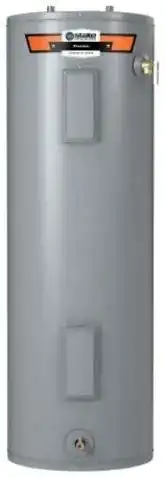
Electric water heaters are the quiet workhorse in Maynard’s tighter homes — no chimney or gas line needed, just a wire to the top and one or two element doors on the front. Their handicap here is access — an electric unit in a converted closet nobody can reach to flush is the one that’ll cook an element first. The water itself is free-chlorine well water, which wears the anode rod and the rubber seals over years, not months. Sized for the space and drained on schedule, an electric unit does fine; ignored in a tight corner, it fails early like everything else you can’t reach in a mill house.
One honest note before you go heat-pump: those hybrid units sit a few feet taller than a standard tank, and they need real air volume around them. In a low-ceiling mill-house cellar with a 100-amp panel, a heat-pump water heater can mean a panel upgrade to feed it — so we’ll tell you straight whether it fits your space and your service, not just whether the rebate looks good.
- Installation
- Repair
- Thermostats
- Heating elements
- Temperature and Pressure Safety Valve
- Vacuum Relief Valve
- Expansion Tank
Water heaters across the MetroWest…
Richard T. Curley Plumbing & Heating handles water heaters in Maynard and the towns around it. If you’re in a neighboring town, here’s where to go:
Call (978) 562-3736 for service in Maynard or any of these towns.
Frequently Asked Questions About Water Heaters in Maynard
We’re based in Hudson — Maynard is under fifteen minutes. For a dead water heater, we route a truck immediately. We keep the parts that fail most often on the truck. Call (978) 562-3736. A cold morning in a Maynard mill house is not the time to wait for a supply delivery.
We’ve replaced water heaters in Maynard spaces you’d swear were built around the tank. Mill house basements, under-stair closets, crawlspace cubbies — we drain the old tank in place and work it out. It might take an extra half hour, but we get it done. Our trucks carry the fittings we’re most likely to need so we don’t leave for parts.
Chlorine in the municipal supply accelerates corrosion inside the tank. Once the anode rod is consumed — usually around year five or six — the chlorine goes to work on the steel shell. Most water heaters in Maynard last 8 to 10 years. The tight access in many Maynard homes means regular flushing rarely happens, which doesn’t help. We can set you up with a maintenance schedule.
Almost always. The thermocouple tells the gas valve the pilot is burning. Over time it wears out, and in Maynard’s older basements, dampness accelerates the corrosion on the connections. We can swap it in about 30 minutes. If the gas valve or burner assembly is rusted through, replacement is the better call.
A standard 40-gallon gas unit runs $1,500 to $2,200 installed. A 50-gallon power-vent runs $1,800 to $2,800. Electric runs $1,200 to $1,800. Tight access in Maynard’s older homes can add labor time, but we’ll tell you upfront if your installation is going to run above the typical range.
Probably the lower heating element. Electric water heaters have two elements — upper and lower. The lower one sits at the bottom of the tank where sediment collects, and it burns out first. When the lower element fails, the upper element still works but only heats the top third of the tank. You get warm water, not hot. We can replace the element in under an hour.
Watch for rusty or discolored water, rumbling or popping sounds from the tank, water pooling around the base, inconsistent water temperature, and a unit that’s over 10 years old. If you notice any of these, call us for an inspection before you’re stuck with a cold shower.
If you have natural gas service to the house, yes. We run the gas line from the meter to the water heater location, install the new unit, and handle the venting. If there’s no gas line to the house, the cost goes up significantly — National Grid has to run the service. We can walk you through the numbers before you decide.
Sediment on the bottom of the tank — even Maynard’s municipal water leaves mineral deposits over time. The popping is water trapped under the sediment layer, flashing to steam and bursting through. It’s not dangerous but it means the tank bottom is heavily sedimented. Flushing might solve it. If the tank is old and the popping is loud, replacement is coming soon.
Usually it’s the chlorine in Maynard’s well water reacting with the sacrificial anode rod inside the tank. That reaction is the rod doing its job — taking the corrosion so the steel tank doesn’t — but it’s also the sign the rod is nearing the end. Swapping in a zinc or aluminum rod, or a powered anode, almost always kills the smell. If it lingers after that, we’ll hunt the real source before you spend anything else.
When a high-efficiency direct-vent boiler replaces the old heating system, the masonry chimney is left serving only the water heater — an “orphaned” water heater. An oversized, unlined stack won’t draw properly for one small appliance, which means poor venting and a real carbon monoxide risk. The clean fix is a lined chimney, or switching the water heater to power-vent or tankless that goes out a sidewall on its own.
Not always, and it’s worth knowing before the rebate tempts you. Heat-pump units are several feet taller than a standard tank and need clear air volume around them, so a low-ceiling mill-house cellar often can’t take one. And on an older 100-amp panel, the unit can trigger a panel upgrade to feed it. We’ll measure the space and check your service first, and tell you honestly whether heat-pump is the right call or whether a standard or tankless fits better.
If your water heater job turns up a leaky faucet or slow drain, our kitchen plumbing in Maynard covers faucets, sinks, disposals, and dishwasher hookups — same-day, same truck.
If the issue is in the bathroom instead, our bathroom plumbing in Maynard handles faucets, drains, toilets, and shower valves.
If your water heater is aging out and your boiler is tired too, our heating services in Maynard handle repairs, replacements, and installs — same-day, same truck.
For everything we do in Maynard — water heaters, kitchens, bathrooms, heating, and more — see our full Maynard plumbing services page.