
That faint trickle in the bathroom isn’t just background noise. A running toilet wastes clean water around the clock and quietly runs up the water bill. The good news is, most running toilets come down to one or two worn parts inside the tank — and the fix is usually a five-minute job. Here’s how to tell what’s wrong, what you can safely fix yourself, and the point where it’s smarter to call someone.
Diagnosing Your Running Toilet
Most running toilets are one of two things: a flapper that won’t seal, or a fill valve that won’t shut off. Take the lid off the tank and listen first. A hissing sound is usually the fill valve. A gentle trickle from the tank into the bowl is usually the flapper.
Don’t trust your ear? Here’s the test I’ve been doing for decades: put a few drops of food coloring in the tank, wait ten minutes without flushing, and look in the bowl. If the color shows up, water’s seeping past the flapper. That one test tells you the leak is real and not your imagination.
The Parts That Actually Fail
The inside of a toilet tank is simpler than it looks. Four parts do almost all the work, and they’re the four that wear out.
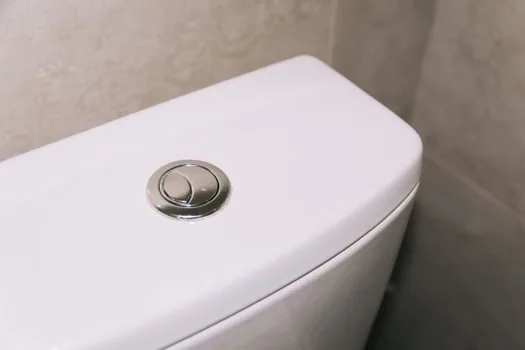
The flapper is the rubber stopper that lifts when you flush and drops back down to seal the tank. It warps and cracks with age, and that’s the #1 cause of a running toilet. The fill valve refills the tank after a flush, and over time it stops closing all the way. The flush valve is the opening the flapper seals against — and in Hudson’s water, iron and mineral staining can keep the flapper from getting a clean seal. And the float tells the fill valve when to stop; set it too high and water spills down the overflow tube, so the toilet runs and runs.
Here’s the thing a lot of the national plumbing guides won’t tell you, because they’ve never actually been in these homes. Around Hudson and the older MetroWest towns, I still walk into houses with toilets from the 1950s — the ones with a tank ball, trip wires, and a guide arm inside. I fixed one of those the other day. And every now and then I run into the even older one, from the 1920s, where the tank hangs on the wall and a flush bend runs down to the bowl.
Those old toilets work fine when they’re taken care of, but the parts don’t match what’s on the shelf at the big-box store today. You can’t just grab a universal flapper and call it done — a 1950s tank-ball setup needs the right ball and wires, and the wall-hung tank is a different system entirely. That’s the kind of toilet where a homeowner who tries to modernize it with the wrong kit usually makes it run worse, not better.
The lesson’s the same either way: the everyday fix on a standard toilet is a five-minute flapper job. But when it’s one of those old Hudson originals, you’re better off with someone who’s seen that exact tank before than with a guessing game in the plumbing aisle.
The Fix, Step by Step
Two repairs stop the vast majority of running toilets. Both are DIY-friendly if you’re patient, and both need the same first move: shut the water off at the valve near the toilet base.
Replacing the Flapper
Since a bad flapper causes most running toilets, start there. Turn the water off, flush to drain the tank, and unhook the old flapper from its ears and its chain. Put the new one on so it centers over the flush valve opening, reconnect the chain with a little slack, turn the water back on, and let the tank refill. If the food-coloring test comes back clean after this, you’ve got it.
Adjusting the Fill Valve and Float
If water’s running into the overflow tube, the level is set too high. On a modern float cup, pinch the clip and slide the float down. On an older ball float, bend the arm down gently. The right level is about an inch below the top of the overflow tube. If that doesn’t do it, the fill valve itself is worn out — a replace job, but still doable for a confident homeowner.
When DIY Isn’t Enough
If the toilet still runs after a new flapper and a fill-valve adjustment, stop guessing. You’re now past the cheap parts, and the problem could be a cracked flush valve, a failed wax seal at the base, or corroded tank bolts. Same if the handle needs jiggling to stop the flow, or the toilet “phantom flushes” in the middle of the night. Yanking apart a toilet that’s beyond a simple parts swap can do real water damage to the floor and subfloor.
That’s the line: flapper and fill valve, fine to try. Cracked porcelain, leaking base, corroded internals — that’s a call.
One thing I see a lot with these old Hudson toilets: someone pulls out the tank ball, the wires, and the guide, and swaps in a universal flush-valve kit — the kind with a peel-and-stick ring that’s supposed to glue onto the old flush valve seat. It sells itself as a five-minute fix, no flapper needed.
It’ll often work for a little while. Then it fails, because that peel-and-stick ring is sitting on a seat that’s 60 or 70 years old and wasn’t built for it. You get a slow leak, then a running tank again, and now the old parts are gone so you can’t even put it back the way it was.
That’s exactly the toilet where I’d tell you to call. When the original hardware’s been pulled out and a universal kit has failed on it, you’re past the DIY parts-and-paste stage. It needs to be fixed right, not re-kitted with another quick fix.
A Running Toilet Costs Real Money
Here’s the honest version of the math, because I don’t want to overstate it. A running toilet usually wastes somewhere between 20 and 200 gallons a day — a slow flapper leak on the low end, a fill valve that won’t shut off at the top. Even at the low end, that’s thousands of gallons a month of water you paid to treat and heat, run straight down the drain. The EPA’s been tracking this for years: household leaks are one of the biggest sources of residential water waste, and leaky toilets are at the top of the list.
The environmental part matters in Massachusetts, where drought restrictions pop up most summers. But the part I’d look at first is the bill. A toilet that runs continuously is the easiest water waste to fix, and it’s usually the cheapest repair in the whole house.
Choosing Who Fixes It
If you’re calling someone, you want a local plumber who works on the older Massachusetts homes, not a call center that dispatches whoever’s closest. Look for upfront pricing and a guarantee on parts and labor. And there’s one thing I’d tell any homeowner: a plumber with a fully stocked truck fixes a running toilet on the first visit. No second trip for a $7 flapper.
That’s the whole point of my Shop on Wheels — I stock the common flappers, fill valves, and flush valves on the truck, so most running toilets are fixed in one visit. It’s a habit I picked up working with my dad, back when I first started. “working with my dad” → Our Story