12 Common Plumbing Problems in Hudson, MA and How to Fix Them
After 46 years fixing plumbing across Hudson and the MetroWest towns, I can tell you this: most of the calls I get are the same twelve problems, showing up in the same kitchens and basements week after week. None of them are mysteries, and a few of them you can knock out yourself in an afternoon. The trick is knowing the difference between the ones you can fix with an adjustable wrench and the ones where a wrong guess turns a $15 part into a $1,500 repair.
That’s what this guide is for. Here are the twelve plumbing problems I see most in Hudson homes, how to handle each one, and exactly when to stop and call.
Don’t want to guess at it? Call Richard T. Curley Plumbing & Heating at (978) 562-3736. I’ll talk you through it over the phone, or come out and fix it — family-owned in Hudson since 1980, and the Shop on Wheels is stocked so most fixes happen on the first visit.
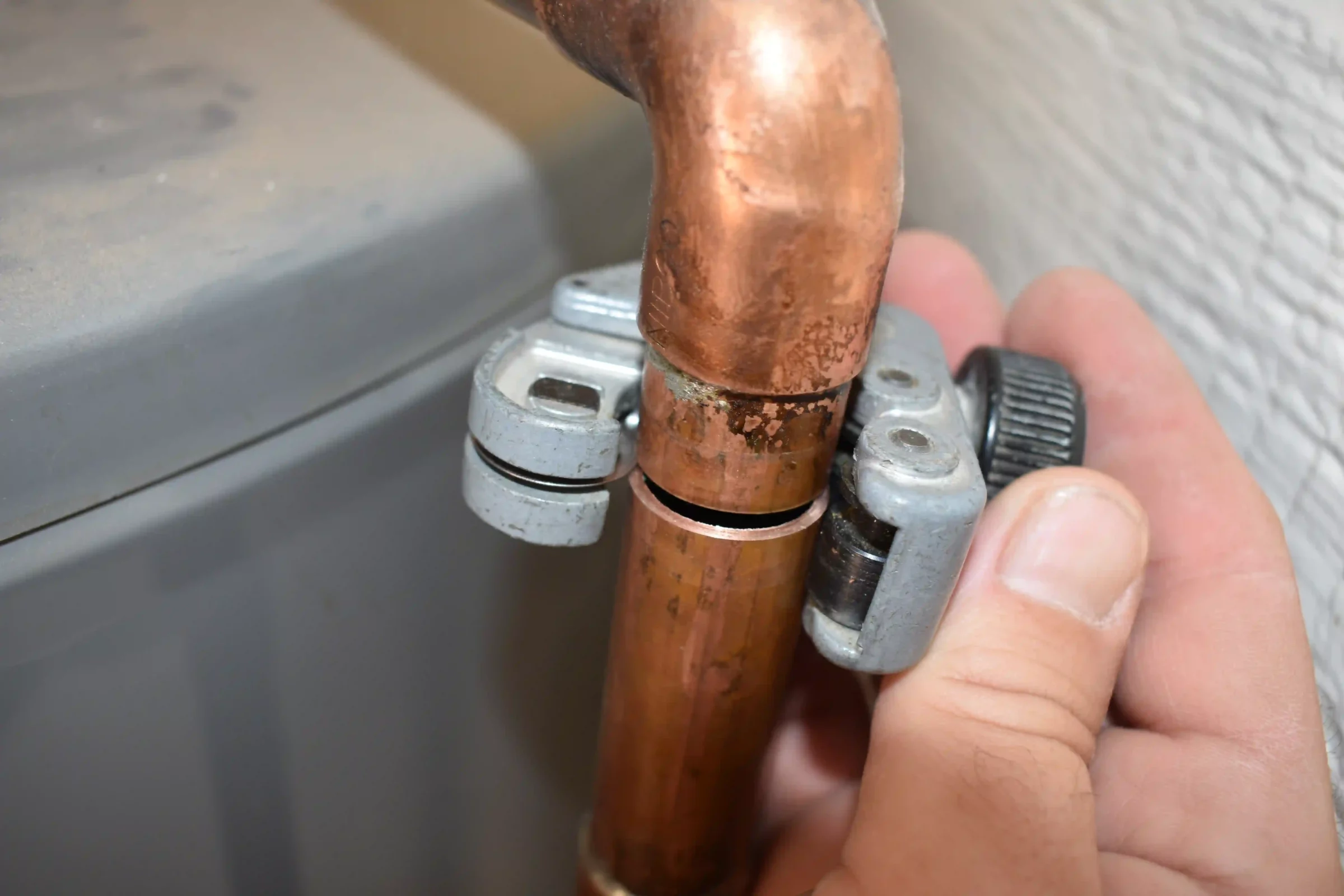
Every kitchen in Hudson runs on the same handful of fixtures — faucet, sink, drain, disposal. They take more daily abuse than anything else in the house from dishes, grease, food scraps, hard water, and years of use. So it’s no surprise that most of the kitchen calls I get fall into five familiar problems. Here’s how to spot each one, what you can fix yourself in an afternoon, and the point where a wrong guess is going to cost you more than a service call.
Kitchen Plumbing Problems
A Leaky Faucet That Won’t Quit
That drip-drip-drip is more than annoying. A faucet leaking one drop a second can waste thousands of gallons in a year, and all that water is money going down the drain.
The cause is almost always a worn washer, a dried-out O-ring, or a corroded valve seat. Parts wear out with use, plain and simple. Fixing it usually means shutting off the water under the sink, pulling the faucet apart, and replacing the worn pieces. On a two-handle faucet it’s usually the washers; on a single-handle it’s the cartridge or ball assembly. Take the old parts to the hardware store and match them up, and you’ll save a chunk on your water bill.
If the drip comes back a week after you “fixed” it, or the faucet is so old and corroded the parts won’t budge, that’s the point to call. A faucet repair takes me under an hour on most Hudson homes, and a replacement isn’t much longer.
A Kitchen Sink That Drains Slowly
A slow kitchen drain is grease and food building up on the inside of the pipe. It doesn’t happen overnight — it narrows a little at a time until one evening the water just sits there.
Start simple: scrape food into the trash, wipe greasy pans with a paper towel, and keep a strainer in the sink. A plunger clears most soft blockages. If you can reach the trap — that curved pipe under the sink — take it off and dump out whatever’s stuck in it.
Skip the bottled chemical drain cleaners. They smell strong and “work” because they eat through grease, but they also sit against your pipes and can eat through those too, especially the older ones in Hudson’s older homes. A bottle buys you a week; it doesn’t fix the buildup.
If both basins back up, or you hear gurgling come up through other drains when the sink runs, the clog’s likely deeper in the line. That one needs a drain cable and someone who knows how to run it without chewing up your pipes. That’s what I’d come out and do.
Low Water Pressure at the Kitchen Tap
Weak pressure at one faucet is usually a clogged aerator — that little screen where the water comes out. Unscrew it, soak it in vinegar to dissolve the mineral buildup, and scrub it with an old toothbrush. Hudson’s water carries a fair amount of iron and minerals, so aerators clog up faster than people expect.
If it’s every faucet in the house that’s gone weak, not just the kitchen, that’s a different story. It can be a pressure regulator going bad, sediment in the main line, or a supply issue. That one’s not a DIY job — it takes someone to trace where the pressure’s actually dropping.
A Garbage Disposal That Hums or Won’t Run
Most disposal calls are jams. It hums but won’t spin, or just clicks and does nothing.
First: cut the power before you put your hand anywhere near it. Never reach into a disposal, even one that’s off. Most jams come from feeding it the wrong stuff — stringy vegetables, grease, coffee grounds, fibrous food that binds up the blades.
If it hums but won’t turn, there’s usually something wedged under the blades you can free with a wrench turned from underneath. Look for a reset button on the bottom of the unit and try that before you call it dead. If it won’t run at all, check that it’s plugged in and the breaker hasn’t tripped.
If it’s freed up and reset and still hums, or it’s leaking from underneath, the motor’s on its way out or a seal’s gone. A disposal replacement is quick — it’s a job I usually wrap up in a single visit.
Water Coming Out Cloudy, Brown, or Rusty
If the water from your tap runs brown or rusty, it’s usually rust and sediment stirred up from old pipes — common in Hudson’s older homes — or from a water heater that’s never been flushed. It’s rarely an emergency, but it’s worth watching.
Fill a clear glass and let it sit. If the water clears as sediment settles to the bottom, it’s particulate from your pipes. Running the tap for a few minutes often flushes it out. If it comes out rusty only when you first turn on the hot water, that points at the water heater tank.
Discolored water that stays brown, or shows up suddenly along with a metallic taste, is worth a call. It can mean a corroding pipe that’s getting worse, or a water heater that needs to be drained or replaced before it fails at a worse time.
Bathroom Plumbing Problems
The bathroom fixtures work hard and quietly until the moment they don’t. A running toilet and a weak showerhead both waste water and money; an overflowing toilet can wreck a floor in minutes. Here’s how to handle all three.
A Toilet That Won’t Stop Running
A toilet that runs nonstop is pouring water into the bowl around the clock, and your water bill shows it. Nearly every time, it’s one of two cheap parts: a flapper that no longer seals, or a fill valve that’s letting the tank overfill.
Lift the lid and watch it fill. If the water keeps trickling into the bowl, the flapper isn’t seating. If the tank fills past the tube and runs over, the fill valve or its float needs adjusting. Both are hardware-store fixes that usually take under an hour, and the parts cost about the same as a coffee.
If you’ve swapped the flapper, adjusted the float, and it’s still running — or the toilet’s old enough that the whole assembly inside is crusted with hard-water scale — that’s when I’d come swap the internals out in one shot. Hudson’s water is mineral-heavy, and it wears toilet guts faster than people realize.
An Overflowing Toilet
The moment you see the water rising, every second counts. Reach behind the toilet and shut off the water supply before it crests the bowl. That single move saves you from a floor full of water.
Then it’s about the cause. A slow partial clog is the usual culprit, and a good plunger with a tight seal clears it more often than not. If you’re plunging and nothing’s moving, don’t force it — a clog deeper in the waste line needs a drain cable, and forcing water down a blocked line can push it back up somewhere worse.
If the water’s clean and it’s just not draining, a plunger usually wins. If it’s backing up bubbling or brown, or it happens on every flush, stop and call. That’s a blockage in the line, not the bowl, and you don’t want to find out where it’s backing up.
A Showerhead That’s Lost Its Pressure
Before you blame the plumbing, unscrew the showerhead and look inside. Hudson’s hard water leaves mineral scale on the little holes, and a head that used to blast turns into a weak dribble. Soak the head in vinegar overnight, scrub it with an old toothbrush, and it often comes back to full strength.
If the pressure’s still weak with a clean head, or if it’s weak everywhere in the house, not just the shower, that’s a system issue — sediment in the line, a pressure regulator, or a supply problem. That’s not a screwdriver fix; it’s a diagnose-the-whole-house fix.
And if after all this you’d rather just have a new head, swapping to a modern low-flow showerhead is a ten-minute job that keeps the pressure while cutting the water and the bill. A replacement I can do in one stop.
Water Heater and Sump Pump Problems
Of everything in your house, these two do their jobs in the dark, behind closed doors, where nobody checks on them until they fail. When a water heater quits or a sump pump sleeps through a storm, you don’t get a warning — you get a flooded basement or a cold shower. Both reward a little attention up front.
A Water Heater That’s Gone Cold
You turn the hot tap and get lukewarm or nothing at all. Before you call anyone, check the thermostat on the tank — a bumped dial explains it more often than people think. If the dial’s set right but the water’s still not hot, or you’re hearing rumbling and popping from the tank, that’s sediment built up on the bottom of the heater, and it’s been quietly making the unit work harder for years.
Hudson’s water carries a lot of minerals, so sediment is the quiet killer of water heaters around here. It insulates the burner from the water, makes the tank run longer, and shortens its life by years. Flushing the tank helps if it’s caught early, but if the heater’s older and the sediment’s hardened, a flush won’t fix a tank that’s already on its way out.
This is one of those places where guessing costs you. A heater that keeps tripping, leaking from underneath, or cycling off and on could be a thermostat, an element, or a failing tank — and the wrong call between “repair” and “replace” is the difference between a hundred bucks and a flooded utility room. If the hot water’s unreliable, call (978) 562-3736 and I’ll tell you straight what you’re looking at.
A Sump Pump That Quits Before the Storm
If you’ve got a sump pump in your Hudson basement, you won’t know it’s failing until the one storm you needed it for. That’s the whole problem with sump pumps: they sit idle most of the year, so the failure shows up exactly when it matters most.
Test yours before the rainy season. Dump a few gallons into the pit and watch that it kicks on, pumps the water out, and shuts off again. Check that it’s plugged in and the breaker’s not tripped, and clear any debris or silt that’s built up around the intake. A pump that hums but won’t move water, or one that short-cycles, is telling you it’s near the end.
Here’s the thing most people don’t plan for: sump pumps have a working life, usually five to ten years, and after that they’re running on borrowed time. If yours is older and you’ve had it through a couple of heavy New England storms already, replacing it before the next one is a lot cheaper than paying for what a dead pump lets into your basement. If it’s not kicking on during a test, or it’s been years since anyone looked at it, call and let me check it before the rain does.
Plumbing Problems That Need a Plumber Right Away
Most of the problems in this guide you can take your time on. These two, you can’t. They’re the ones I’d tell you not to touch and not to wait on, because the cost of waiting goes up by the hour.
A Burst Pipe
A burst pipe is the one problem where speed matters more than anything in this list. If you see water pooling where it shouldn’t be, or water pushing through a ceiling, shut off the main water supply first. Don’t go looking for the source with the water still on — close the valve, then find the pipe.
Most bursts in Hudson happen two ways: pipes that froze and cracked over the winter, or old pipes that finally gave out after decades of corrosion and stress. The freeze-thaw cycle is rough on the older homes around here, and a pipe that survives one cold snap can fail at the seam on the next one.
You can limit the mess with towels and buckets and by shutting the water off fast, but a burst pipe is not a do-it-yourself repair. It has to be cut out and replaced properly, and there’s usually water damage hiding in the wall or under the floor that needs looking at too. Turn the water off, then call — the sooner the pipe’s repaired, the less damage you’re dealing with and the less the whole thing costs.
Foul Odors Coming From the Drains
A bad smell from a drain is your plumbing trying to tell you something, and ignoring it doesn’t make it go away.
The most common cause is a dry P-trap — that U-shaped bend under every sink holds water to seal out sewer gas, and if a drain hasn’t been used in a while, the water evaporates and the smell comes up. The fix is as simple as running water down the drain to refill the trap.
But if the smell keeps coming back, or you can smell it around the house and not just one sink, that’s different. Sewer gas in the house can mean a cracked or failing line, a bad seal, or a vent problem. And it’s not just unpleasant — sewer gas is something you don’t want building up where people live and breathe.
A stubborn smell, a smell around the toilet or the foundation, or one that gets stronger after it rains — call on that one. It’s usually a sign of something in the line that’s going to get worse, not better, and it’s far cheaper to track down and fix now than after it becomes a backup.
Still not sure if it’s a fix-it-yourself or a call-it-in? Don’t guess — that’s what I’m here for. Call Richard T. Curley Plumbing & Heating at (978) 562-3736 and tell me what you’re seeing. I’ll talk it through, tell you straight whether it’s worth your Sunday or worth my truck, and come out if it needs a pro.
No call center, no trip charge games. You call, you get me — a Hudson plumber who’s been fixing these same twelve problems in the MetroWest towns since 1980. The Shop on Wheels is stocked before I leave, so most jobs wrap up on the first visit.
.