
Most kitchen faucet problems come down to a few worn parts and a little grit. Over 40 years of faucet calls around MetroWest, we see the same handful of failures again and again: a worn washer, a clogged aerator, a loose fitting. Here are the eight we get called for most, what you can safely try yourself, and the point where it’s smarter to pick up the phone.
I remember when I first started working with my dad years ago, a lot of the older Portuguese homes around Hudson had two kitchens — a working kitchen in the cellar, where the real cooking happened, and the “show” kitchen upstairs, kept clean for company and holidays. Hudson’s got a big Portuguese community, and that second kitchen was a tradition in a lot of those families. You don’t see it as much anymore; the newer homes and the younger generation went to one kitchen. But for plumbing, the lesson’s the same either way: the kitchen that works every day wears out, and the one that sits idle doesn’t. It’s usually that hardworking cellar faucet that finally gives out. Check it now before it surprises you.
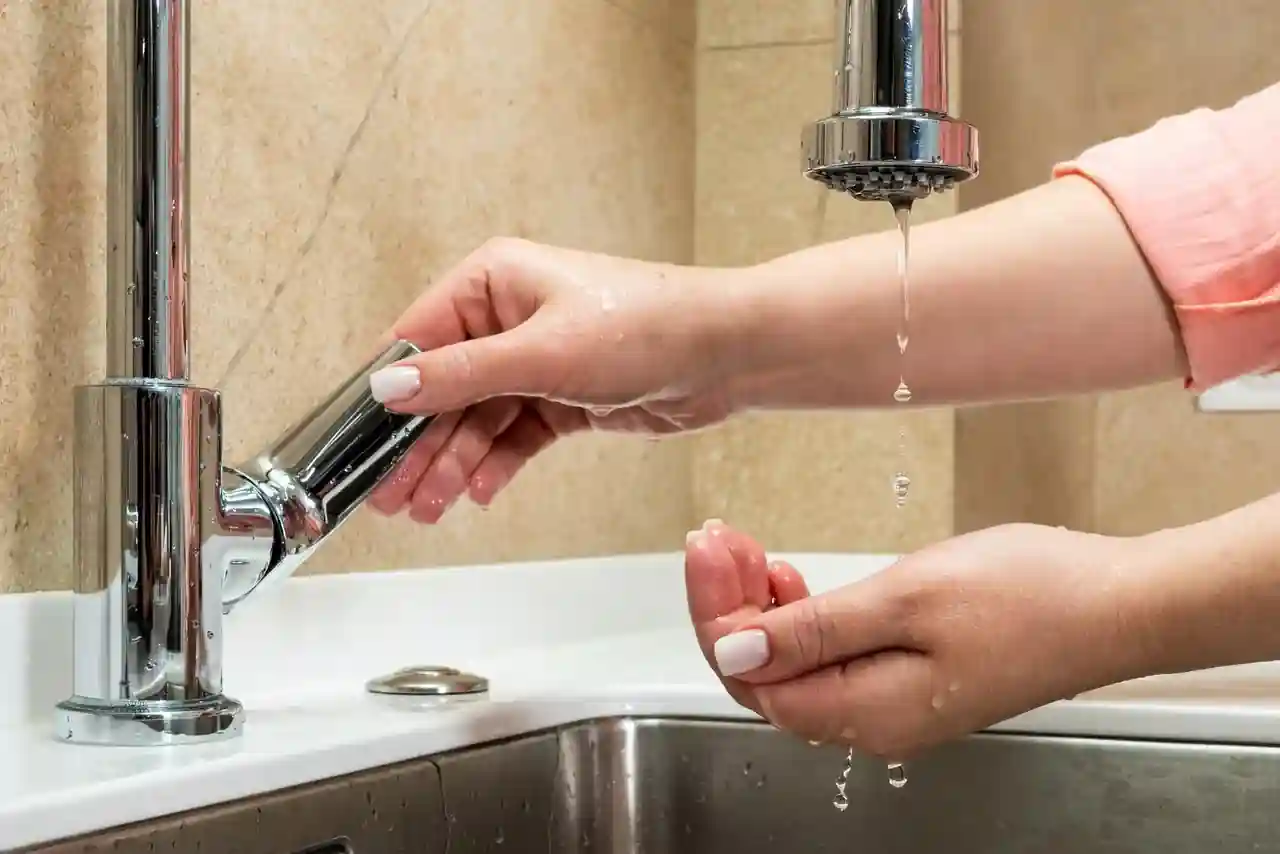
1. A Faucet That Drips After You Shut It Off
A leaky faucet is almost always a worn washer or O-ring — the classic culprit on older two-handle faucets, which are still everywhere in Hudson’s older kitchens. Single-handle faucets have cartridges or ball valves inside, and those wear out too.
A drip isn’t an emergency, but it won’t fix itself, and it can stain the basin and quietly rot the cabinet below. Parts are cheap; the damage from ignoring it isn’t.
This is one of the easier repairs if you’re comfortable with it. Shut the water off first, take the old parts to the hardware store to match them, and go slow. Two-handle faucets with traditional washers are generally the easiest to rebuild yourself.
When to Call a Plumber Instead
The parts are seized or corroded, you can’t find the right part for your model, or water starts weeping from the base of the faucet onto the counter (that’s a seal failure, not a worn washer). A stocked truck usually makes a faucet repair or replacement an under-an-hour job.
2. Low Water Pressure at the Kitchen Tap
Before you blame the faucet, check the aerator — the little screen right where the water comes out. Minerals build up in it over time and choke the flow. Unscrew it, rinse out the grit, and put it back. That fixes a lot of low-pressure calls on the spot.
If the aerator’s clean and it’s still weak, look at the supply lines under the sink for a kink, and make sure the shutoff valve is fully open. It’s easy to leave one half-closed after a repair.
And here’s a Hudson-specific one: in a home with a second, rarely used kitchen, that idle faucet’s supply lines can seize and the valve can stiffen from sitting. See #1 — it’s usually the ignored second kitchen that’s at fault.
When to Call a Plumber Instead
If it’s sputtering or weak at every sink in the house, that’s a whole-house problem — a pressure regulator or a supply issue — and it’s one for a diagnosis, not a screwdriver.
3. A Noisy Faucet
A faucet that hisses, rattles, or bangs when you shut it off usually means either loose connections or air trapped in the lines. If you’ve had work done on the plumbing recently, trapped air is the likely cause — running the tap for a few minutes often clears it.
That loud bang when the water shuts off is called water hammer, and it’s worth fixing sooner than later. It hammers the pipes and fittings every time. A water hammer arrestor handles it.
When to Call a Plumber Instead
If tightening the fittings doesn’t quiet it, or if the banging is coming from inside the wall. You don’t want to guess your way through a pipe problem inside a finished wall.
4. Water Leaking at the Base of the Faucet
Water pooling around the base means either a loose connection or a worn seal. Shut the water off under the sink first, then tighten the nuts holding the faucet to the counter. If the seal has hardened or cracked, tightening won’t save it — it’s time for a new seal.
While you’re under there, dry everything off and run the water to watch for drips. A lot of “base leaks” are actually a supply line or the drain connection under the cabinet, not the faucet at all.
When to Call a Plumber Instead
If tightening and a new seal don’t stop it, or if water is staining the cabinet or the ceiling below. A slow leak under the sink can do thousands in damage over a fifteen-dollar part.
5. Mineral Build-Up on the Faucet
The white crust that builds up on the spout and handles is mineral buildup. Hudson treats its water for iron and manganese removal, but you’ll still see that whitish staining on fixtures over time, especially on chrome.
To lift it, soak a cloth in vinegar, wrap it around the affected area, and let it sit for a few hours, then wipe clean. Regular wiping of the aerator and spout keeps it from coming back as fast.
A note: don’t scrub hard with steel wool or an abrasive pad — you’ll scratch the finish, and then you’ll be looking at a new faucet sooner than you planned.
6. Water Temperature That Won’t Stay Put
If the water runs hot for a bit then suddenly runs cold, or you can’t get it to hold a temperature, the mixing valve or cartridge is usually the problem. Single-handle faucets rely on a cartridge to blend hot and cold, and when it wears or gets clogged with debris, the temperature swings.
Shut the water off, relieve the pressure, and check the cartridge for wear or grit. A lot of temperature problems come down to a small piece of debris caught in the valve.
When to Call a Plumber Instead
If you can’t identify the cartridge for your model, or if replacing it doesn’t fix the swing. Older faucet bodies sometimes aren’t worth the fight, and a replacement finishes it faster than a third trip to the hardware store.
7. A Handle That’s Hard to Turn or Feels Loose
A handle that’s stiff, wobbly, or won’t move is usually a worn internal part or a loose retaining nut. Shut the water off, remove the handle, and check the nut underneath. Tightening it often fixes the wobble.
If it’s still stiff after that, the cartridge is likely shot and it’s a replacement job. Doing it wrong means a broken handle or a leak, so don’t force it.
When to Call a Plumber Instead
If the handle is seized tight or you can’t get it apart without risking a break. Forcing a corroded handle is how you turn a simple repair into a faucet replacement.
8. After a New Faucet Install
The two most common post-install problems are a leak at the base and a crooked faucet. The base leak means the seal didn’t sit right or the fittings weren’t snugged evenly. The crooked faucet is usually a mounting that shifted during tightening.
The fix for both is patience: get the seal seated properly, tighten the mounting evenly, and check for drips before you call it done.
When to Call a Plumber Instead
If you’ve installed it and something’s leaking or wobbling and you’ve already fought it once. A proper leak-free install from the start is cheaper than water damage, and it’s a quick job for a stocked truck.
The Short Version
Handle the loose aerators and worn washers yourself if you’re comfortable. The minute it’s seized, leaking from the base, or the problem is in the wall or the whole house, put the tools down and make the call.
We fix kitchen faucets in Hudson, Sudbury, Marlborough, Bolton, and across MetroWest. Call Richard T. Curley Plumbing & Heating at (978) 562-3736. Family-owned since 1980, and the Shop on Wheels is stocked — so we can usually stop the drip, the leak, or the noise on the first visit.