Call us at...


Water Heater Installation, Replacement & Repair in Berlin, MA
Berlin's rural properties and well‑water systems demand a water heater that can handle sediment and cold incoming temperatures. We service and replace gas and electric water heaters across Berlin, and we understand how local water conditions affect tank performance and lifespan.
Berlin runs entirely on private wells. No municipal supply, no treated water — just groundwater that comes out of the earth carrying dissolved iron, manganese, and fine sediment. That sediment settles in the bottom of your water heater tank from day one. Over five or six years it builds into a layer that insulates the water from the burner, cuts your hot water capacity, and eats the anode rod faster than treated water ever would. It isn't only sediment, either — Berlin's bedrock gives the water real hardness, calcium and magnesium that drop out as scale on the tank bottom and inside a tankless heat exchanger, right alongside the iron. Berlin's rural lots also mean older homes with basement access that ranges from tight to tighter. We've been swapping water heaters in Berlin since 1980. We know the water, we know the houses, and we keep the parts that fail most often on the truck, so a dead heater doesn't mean a cold weekend.
There’s one more thing Berlin’s water does before it ever reaches a fixture: it arrives cold. Deep-rock wells deliver water in the 40s to 50s year-round, colder than any municipal main. That means a Berlin water heater has a longer climb to reach temperature, so recovery is slower and the tank works harder on every gallon — which is why sizing the heater to the well, not just to the house, matters more out here than it ever does in a town on treated water. Add the sediment that settles out of Berlin’s groundwater and the iron that stains it, and a heater in this town earns a shorter life than the same unit would anywhere with a water main. The right unit, the right anode, and the occasional sediment flush are what stretch that life back out.
Berlin’s rural properties have unique water heater needs. Read our complete guide to water heater installation in Massachusetts.
Water Heater Services in Berlin...
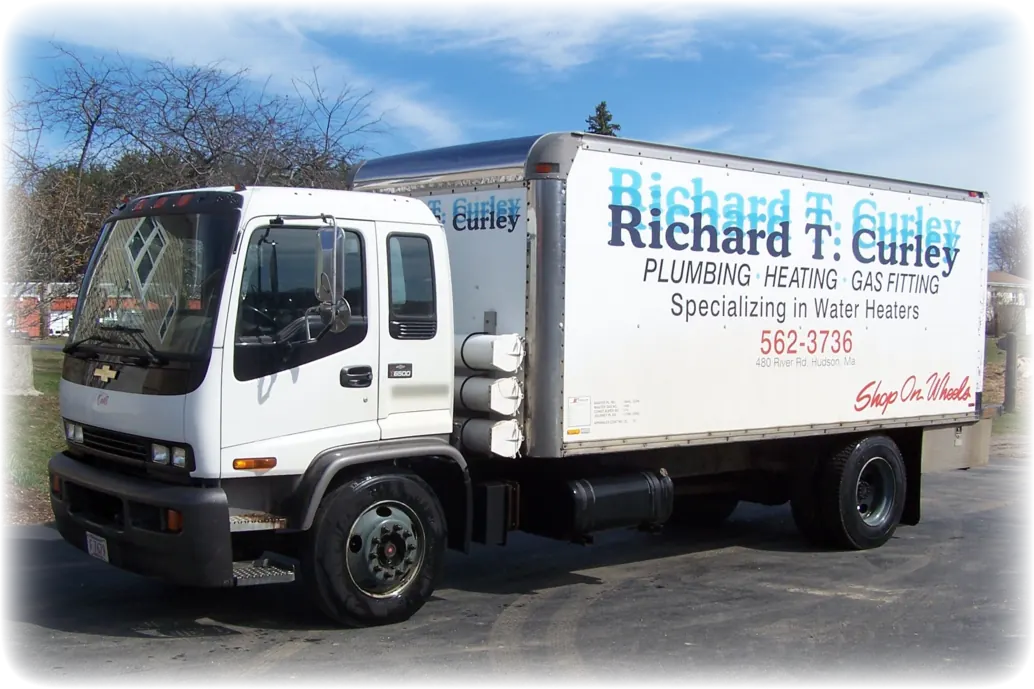
Richard T. Curley Plumbing & Heating has provided Berlin, Massachusetts, with affordable water heater installation, replacement, and repairs since 1980. We do our best to provide the residents of Berlin, Massachusetts, with same-day service.
"Specializing in water heaters"
“Specializing in Water Heaters” — we don’t just say that. It’s written right on the side of all of our trucks for over 40 years.
Berlin runs all on private wells, so we see a lot of electric water heaters here — and the iron and manganese in the water keeps the heating elements working hard.
Berlin’s housing runs two ways at once — fieldstone farmhouses from another century, and newer subdivisions with full-height finished basements. In the old places it’s low headroom, dirt floors, and bulkhead stairs that a modern full-size tank won’t clear, so we reach for a lowboy or a re-route. In the newer homes the basements are roomy, but the houses themselves are big, and a standard 40-gallon tank won’t keep up with the bathrooms and soaker tubs. Sizing the unit to the house — not just the fixture count — is most of the job either way.
Gas Water Heaters
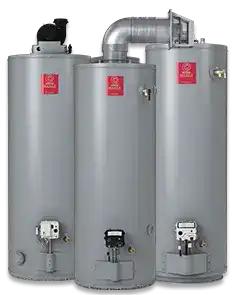
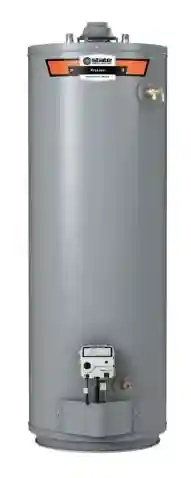
Gas water heaters (natural gas or propane) are atmospheric-vented models, venting through galvanized pipe into a chimney. On Berlin’s rural lots, where a gas main often doesn’t reach, that usually means propane. The heater works the same either way — the difference is that a propane tank runs out at the worst possible time, and a cold shower in January is exactly when you’d want a service call answered the same day.
- Installation
- Replacement
- Repair
- Gas thermostats
- Thermocouple
- Temperature and pressure safety valves
- Vacuum relief valves
- Expansion tanks
Power-Vent Water Heaters
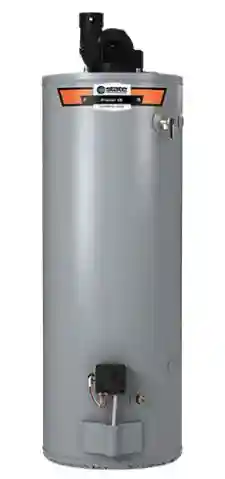
Power-vent water heaters are the atmospheric model with a re-engineered exhaust — a PVC vent and a blower on top that pushes combustion by-products out the roof or a sidewall when there’s no chimney to draw. They’re a good fit for the tight basements and mechanical closets you find in older Berlin homes, where a straight chimney run isn’t there to use. And out here there’s a sizing error we see all the time: a unit rated for warm incoming water gets throttled by Berlin’s 40-degree winter wells. We size power-vent and tankless units for February, not the brochure.
- Installation
- Replacement
- Repair
- Gas thermostats
- Temperature and pressure safety valves
- Vacuum relief valves
- Expansion tank
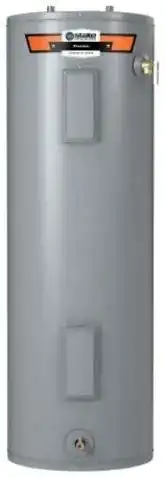
Electric Water Heaters
Electric water heaters are common out here because Berlin’s rural lots don’t always have a gas option. But Berlin’s well water is hard on them — the iron and manganese in it work the heating elements harder and plate them with scale, so an electric element on untreated well water doesn’t last as long as the same unit would on city water. We keep elements on the truck for exactly this reason, because a dead element in Berlin means no hot water until it’s swapped. Worth flagging if you’re thinking heat-pump: those hybrid units pull heat from the air and blow out dry, cool air, so in a big Berlin basement they double as a dehumidifier through the humid months. They’re taller and often want a dedicated circuit, but in the roomy basements out here they usually fit.
- Installation
- Replacement
- Repair
- Thermostats
- Heating elements
- Temperature and pressure safety valves
- Vacuum relief valves
- Expansion tank
Water heaters across the MetroWest…
Richard T. Curley Plumbing & Heating handles water heaters in Berlin and the towns around it. If you’re in a neighboring town, here’s where to go:
Call (978) 562-3736 for service in Berlin or any of these towns.
Frequently Asked Questions About Water Heaters in Berlin
Same day. We’re based in Hudson, and Berlin is a straight shot down Route 62. We keep gas, electric, and power-vent units on hand, so we don’t need to run to a supply house. Call (978) 562-3736. Berlin’s well water is hard on heaters and they don’t give much warning before they go.
Yes. Berlin’s groundwater carries dissolved iron and manganese. Those minerals settle on the bottom of the tank over time, forming a layer of sediment that insulates the water from the burner. The heater runs longer to reach the same temperature, the steel at the bottom overheats, and the tank rusts through sooner than it would on treated water. Regular flushing helps. Almost nobody does it — but the heaters that get flushed last.
A standard gas water heater with a high-quality anode rod, flushed every six months. Electric heaters work too, but the lower heating elements sit right in the sediment layer and burn out faster on Berlin water. Power-vent units add a blower motor that doesn’t care about water quality. The real key is maintenance, not the fuel type. We can set you up with a schedule.
A standard 40-gallon gas water heater typically runs $1,500 to $2,200 installed. A 50-gallon power-vent unit runs $1,800 to $2,800. Electric heaters run $1,200 to $1,800. The exact cost depends on venting condition, whether the old tank drains clean, and whether the gas line or electrical needs updating. Rural Berlin homes sometimes need a pressure regulator added if the well pump pressure is high — we’ll tell you before we start.
Usually. The thermocouple — the safety sensor that tells the gas valve the pilot is burning — is the most common failure. We swap it in about 30 minutes. If the gas valve itself is bad or the burner assembly is rusted through from years of damp basement air, replacement makes more sense. We’ll diagnose it and give you the cost before we do either.
Iron in your well water collecting inside the water heater tank. The sediment layer at the bottom is saturated with rust-colored minerals, and when you draw hot water, some of it stirs up and comes through the pipes. Flushing the tank clears it temporarily. A whole-house iron filter stops it permanently. We can flush the tank and talk through your filtration options in the same visit.
Yes. We’ve worked in Berlin basements you have to duck to walk through. We’ll get the old tank out and the new one in. It might take a little longer and we might need to drain it in place before moving it, but we’ll get it done. Our trucks carry the parts we need so we don’t waste time leaving for a supply run.
Attach a garden hose to the drain valve at the bottom of the tank, run it to a floor drain or outside, and open the valve. Let it run until the water comes out clear — usually a few gallons. Do it every six months. If the drain valve is clogged with sediment and won’t flow, don’t force it. Call us. A stuck plastic drain valve can snap off, and then you’re replacing the heater whether you wanted to or not.
All of them. Long driveways, houses set back from the road, dirt basements, tight access — we cover every Berlin address. Same-day service applies to the whole town.
Usually it’ll do more than work — it’ll earn its keep. Heat-pump units pull heat from the surrounding air and blow out cool, dry air, so in a big Berlin basement they act like a dehumidifier through the humid months. They’re taller than a standard tank and typically want a dedicated circuit, so we’ll check your panel and clearances first. In a tight fieldstone cellar they may not fit, but in a roomy newer basement they usually do.
If your water heater job turns up a leaky faucet or slow drain, our kitchen plumbing in Berlin covers faucets, sinks, disposals, and dishwasher hookups — same-day, same truck.
If the issue is in the bathroom instead, our bathroom plumbing in Berlin handles faucets, drains, toilets, and shower valves.
If your water heater is aging out and your boiler is tired too, our heating services in Berlin handle repairs, replacements, and installs — same-day, same truck.
For everything we do in Berlin — water heaters, kitchens, bathrooms, heating, and more — see our full Berlin plumbing services page.